
What To Do When You Feel Stuck
What To Do When You Feel Stuck
You want to go over there…but you can't...
You want to go over there…but you can't...
December 12, 2025
December 12, 2025
You can…
state who you want to be
what kind of world you want to be in
imagine what it would be like if you were there
…but you stay stuck.
You want transformation, but you keep snapping back to the old you (the old habits) the old world, even though you genuinely want the change.
And you don't understand how.
You don't understand how the way you’re caring about things (the way you’re participating in yourself and your world) is preventing you from making that way of life a viable option to you.
Carl Jung often observed that many people come to therapy precisely because they feel stuck.
It might not even be that there are particular, concrete problems in your life.
It might be that everything is actually going kind of well, but there’s a sense that you’re not moving and you should be.
But there's a problem you face when you are facing significant transformation…
And this goes to the heart of L.A. Paul's book “Transformative Experience”:
She points to the way the possibility of such transformative experiences render you stupefied, because what they require is that you confront a deep kind of existential ignorance.
She first starts with an example to warm you up to the thinking:
Somebody offers you to taste this fruit that you've never tasted before.
You could hate it or love it.
But the thing is, you don't know which reaction you're going to have until you bite the fruit.
So…do you bite the fruit?
You may say:
Well, what does it matter? There's nothing significantly at risk if you eat the fruit or not.
That's true, but what the fruit example points to is the following:
There's a kind of knowing that is dependent on your state of being.
This is your perspectival knowing.
There's no way of knowing that ahead of time.
You have to go through the experience to know what it is like to have the experience.
This is what she calls an epistemic transformation.
But some of the times what we're confronting is something deeper (a personal transformation).
This is knowing not just by having a particular perspective.
This is knowing by having the agent–arena relationship (that makes a world show up for you) reorganized.
It’s a restructuring of who you are (agent) and what the world is for you (arena) at the same time.
And you don't know what it's like to be that person in that world, because you have to actually be changed and the world has to be changed in order for you to have that participatory knowing.
Here’s an example:
Should you have a child?
The problem you are facing:
You don't know what you're missing if you don't have a child, because you’re going to become a different person…you don't know who you're going to be when you're a parent because your preferences, your character (everything) is going to change.
But you also don't know what you're going to lose until you go through the experience.
You're existentially ignorant.
So here's what you face:
You don't know what you’re going to lose if you become a parent.
Once you go through this change, you will have lost a way of being (what it’s like not being a parent).
You can't go back to it.
Even if you return to the same house or job, you don’t return as the same participant; the field does not present itself to you as it used to. And you can’t hit Ctrl-Z to undo it.
So…then you shouldn't do it?
Ah, but if you don't do it, you don't know what you’re missing.
There could be a way of being there that is amazing and wonderful.
You’re caught.
You equally don't know what you’re going to lose and you don't know what you’re missing.
Many people have difficulties in their life, precisely because they get transfixed by this.
If you choose this career, you lose all these wonderful potential possibilities.
So should you just keep all your possibilities open?
But if you never choose, what are you missing?
You'll never know because you’ve never actually gotten into any particular career.
This highlights how you can be stupefied as you face the need for radical transformation.
So many people are not only stuck, they're also stupefied.
They don't know if they should.
And when you’re stuck and stupefied you can't imagine how to make another way of life work.
And just think briefly about how all of this can mix beautifully with parasitic processing.
So how do you get out of this?
Let’s look at the following:
What do some people actually do when they're considering whether or not they want to have a child?
They typically get a dog.
And then they do some kind of bizarre things with the dog.
Sometimes they give it its own room. They take family pictures with it. They give the dog a bed and some toys.
They're doing something that’s kind of like having a child.
What’s going on here?
Let’s look at another example:
Should you enter into a romantic relationship with that person?
You don’t know what you’re missing, and you don’t know what you’ll be losing.
So what do you do?
People will give you this advice:
Go on a three-week trip with them.
Why?
It's like a new life. But it's not everyday life. It's in between…it's liminal, in between. They create a simulation, but it’s not an illusion.
And in that liminal place you’re pretending what it would be like to be with this person all the time.
And you may come back after the trip and say:
You know what? I just don't think so.
You don't do that five years into a romantic relationship.
You don't go:
You know what? Just don't think so (and then leave).
What are people doing in these two examples?
They're doing serious play. They're pretending.
The original meaning of the word “pre-” (before) and “tendere” (to stretch). They are extending forth, reaching for a taste of something.
They’re getting a taste of the perspectival and participatory knowing of what it would be like to be a parent in a world in which you have a child (or to have a partner in a world in which you are in a relationship).
You’re getting a perspectival and participatory taste, but you’re in a liminal place.
You haven't generated a human being (and you are not in a relationship).
You may say that's just fantasy, but pay attention:
This roleplay helps people get unstuck by giving them not more arguments, but a lived taste of the person-and-world they’re considering moving into.
One of the disasters of our culture is that we think play is only about fun.
We've trivialized it.
The whole point about play is that it puts you in between:
Here's the world you're in, and here's the world you want to be in.
And then there's this liminal zone where you can play.
It’s no coincidence that, as organisms become more intelligent (and more in need of the right developmental transformations) they also become more playful.
They need more and more play.
Play can be fun…but it's not really fun that people are after when they adopt the dog and treat it like a child.
They're confronting the possibility of a transformative experience.
They're playing in order to see how and whether they should go through the change.
It's about a deep engagement with processes of transformation.
They participate in an enactive analogy:
This isn't an analogy of word or thought because that's not going to work.
This is an analogy you enact:
You go through the actions to cultivate perspectival and participatory change.
Getting a dog before deciding about children changes your routines, responsibilities, and emotional responses in ways that overlap with parenting just enough to let your attention reorganize. Your schedule shifts, you start anticipating needs and feeling the tug of caretaking.
The world begins to answer you differently, and you begin to answer it differently.
Ultimately this means that if you want to transform and to be transformational, you have to move past collecting tools, and fundamentally shift how you see yourself in relation to the world.
You need to be in scenarios which challenge your assumptions, beliefs and identity.
And a lot of people are looking for this:
Ways of transforming, not just their cognition (or their beliefs) but transforming their consciousness in a participatory fashion. Transforming their character (what they identify with) and how that identification enables them to inhabit an agent arena relationship.
They are hungry.
They are hungry for ways of dealing with being existentially trapped…
You can…
state who you want to be
what kind of world you want to be in
imagine what it would be like if you were there
…but you stay stuck.
You want transformation, but you keep snapping back to the old you (the old habits) the old world, even though you genuinely want the change.
And you don't understand how.
You don't understand how the way you’re caring about things (the way you’re participating in yourself and your world) is preventing you from making that way of life a viable option to you.
Carl Jung often observed that many people come to therapy precisely because they feel stuck.
It might not even be that there are particular, concrete problems in your life.
It might be that everything is actually going kind of well, but there’s a sense that you’re not moving and you should be.
But there's a problem you face when you are facing significant transformation…
And this goes to the heart of L.A. Paul's book “Transformative Experience”:
She points to the way the possibility of such transformative experiences render you stupefied, because what they require is that you confront a deep kind of existential ignorance.
She first starts with an example to warm you up to the thinking:
Somebody offers you to taste this fruit that you've never tasted before.
You could hate it or love it.
But the thing is, you don't know which reaction you're going to have until you bite the fruit.
So…do you bite the fruit?
You may say:
Well, what does it matter? There's nothing significantly at risk if you eat the fruit or not.
That's true, but what the fruit example points to is the following:
There's a kind of knowing that is dependent on your state of being.
This is your perspectival knowing.
There's no way of knowing that ahead of time.
You have to go through the experience to know what it is like to have the experience.
This is what she calls an epistemic transformation.
But some of the times what we're confronting is something deeper (a personal transformation).
This is knowing not just by having a particular perspective.
This is knowing by having the agent–arena relationship (that makes a world show up for you) reorganized.
It’s a restructuring of who you are (agent) and what the world is for you (arena) at the same time.
And you don't know what it's like to be that person in that world, because you have to actually be changed and the world has to be changed in order for you to have that participatory knowing.
Here’s an example:
Should you have a child?
The problem you are facing:
You don't know what you're missing if you don't have a child, because you’re going to become a different person…you don't know who you're going to be when you're a parent because your preferences, your character (everything) is going to change.
But you also don't know what you're going to lose until you go through the experience.
You're existentially ignorant.
So here's what you face:
You don't know what you’re going to lose if you become a parent.
Once you go through this change, you will have lost a way of being (what it’s like not being a parent).
You can't go back to it.
Even if you return to the same house or job, you don’t return as the same participant; the field does not present itself to you as it used to. And you can’t hit Ctrl-Z to undo it.
So…then you shouldn't do it?
Ah, but if you don't do it, you don't know what you’re missing.
There could be a way of being there that is amazing and wonderful.
You’re caught.
You equally don't know what you’re going to lose and you don't know what you’re missing.
Many people have difficulties in their life, precisely because they get transfixed by this.
If you choose this career, you lose all these wonderful potential possibilities.
So should you just keep all your possibilities open?
But if you never choose, what are you missing?
You'll never know because you’ve never actually gotten into any particular career.
This highlights how you can be stupefied as you face the need for radical transformation.
So many people are not only stuck, they're also stupefied.
They don't know if they should.
And when you’re stuck and stupefied you can't imagine how to make another way of life work.
And just think briefly about how all of this can mix beautifully with parasitic processing.
So how do you get out of this?
Let’s look at the following:
What do some people actually do when they're considering whether or not they want to have a child?
They typically get a dog.
And then they do some kind of bizarre things with the dog.
Sometimes they give it its own room. They take family pictures with it. They give the dog a bed and some toys.
They're doing something that’s kind of like having a child.
What’s going on here?
Let’s look at another example:
Should you enter into a romantic relationship with that person?
You don’t know what you’re missing, and you don’t know what you’ll be losing.
So what do you do?
People will give you this advice:
Go on a three-week trip with them.
Why?
It's like a new life. But it's not everyday life. It's in between…it's liminal, in between. They create a simulation, but it’s not an illusion.
And in that liminal place you’re pretending what it would be like to be with this person all the time.
And you may come back after the trip and say:
You know what? I just don't think so.
You don't do that five years into a romantic relationship.
You don't go:
You know what? Just don't think so (and then leave).
What are people doing in these two examples?
They're doing serious play. They're pretending.
The original meaning of the word “pre-” (before) and “tendere” (to stretch). They are extending forth, reaching for a taste of something.
They’re getting a taste of the perspectival and participatory knowing of what it would be like to be a parent in a world in which you have a child (or to have a partner in a world in which you are in a relationship).
You’re getting a perspectival and participatory taste, but you’re in a liminal place.
You haven't generated a human being (and you are not in a relationship).
You may say that's just fantasy, but pay attention:
This roleplay helps people get unstuck by giving them not more arguments, but a lived taste of the person-and-world they’re considering moving into.
One of the disasters of our culture is that we think play is only about fun.
We've trivialized it.
The whole point about play is that it puts you in between:
Here's the world you're in, and here's the world you want to be in.
And then there's this liminal zone where you can play.
It’s no coincidence that, as organisms become more intelligent (and more in need of the right developmental transformations) they also become more playful.
They need more and more play.
Play can be fun…but it's not really fun that people are after when they adopt the dog and treat it like a child.
They're confronting the possibility of a transformative experience.
They're playing in order to see how and whether they should go through the change.
It's about a deep engagement with processes of transformation.
They participate in an enactive analogy:
This isn't an analogy of word or thought because that's not going to work.
This is an analogy you enact:
You go through the actions to cultivate perspectival and participatory change.
Getting a dog before deciding about children changes your routines, responsibilities, and emotional responses in ways that overlap with parenting just enough to let your attention reorganize. Your schedule shifts, you start anticipating needs and feeling the tug of caretaking.
The world begins to answer you differently, and you begin to answer it differently.
Ultimately this means that if you want to transform and to be transformational, you have to move past collecting tools, and fundamentally shift how you see yourself in relation to the world.
You need to be in scenarios which challenge your assumptions, beliefs and identity.
And a lot of people are looking for this:
Ways of transforming, not just their cognition (or their beliefs) but transforming their consciousness in a participatory fashion. Transforming their character (what they identify with) and how that identification enables them to inhabit an agent arena relationship.
They are hungry.
They are hungry for ways of dealing with being existentially trapped…
John Vervaeke, Ethan Hsieh & David Kemper
John Vervaeke, Ethan Hsieh & David Kemper
Latest Course
Daemons in Divinity
An Interdisciplinary Study on the Daemon
Latest Course
Daemons in Divinity
An Interdisciplinary Study on the Daemon
Latest Course
Daemons in Divinity
An Interdisciplinary Study on the Daemon
More insights for you.
More insights for you.
Explore more of the science and philosophy here.
Explore more of the science and philosophy here.
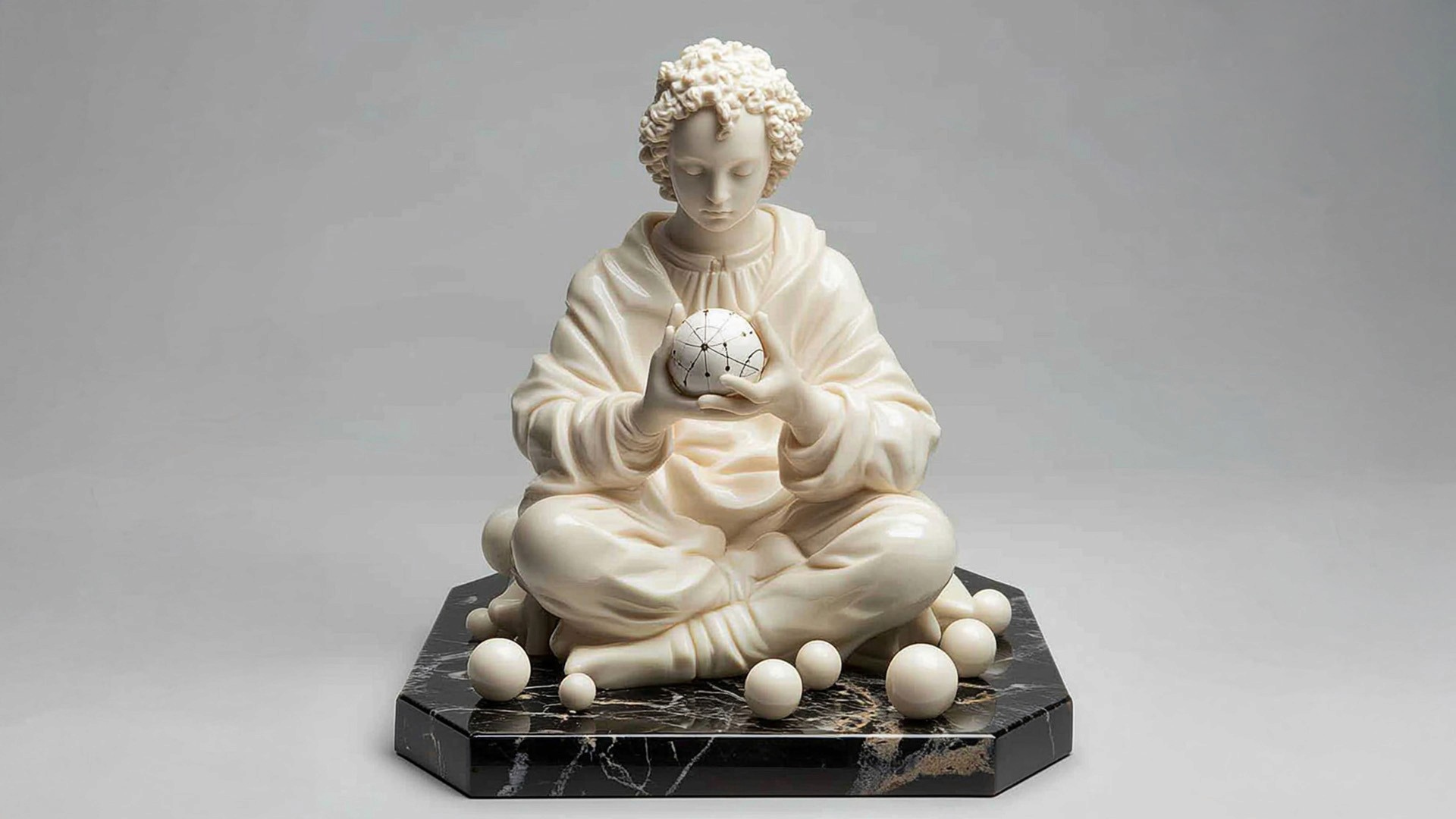
One of the disasters of our culture is that we think play is only about fun.
Last time I invited you to see...
Last time I invited you to see...
Your questions.
Answered.
Not sure what to expect? These answers might help you feel more confident as you begin.
Didn’t find your answer? Send us a message — we’ll respond with care and clarity.
What if I’m not familiar with philosophy or science?
Yes! Our courses are designed to be accessible to both beginners and those with experience. John will hold a seminar after each lecture to answer any questions you might have.
What if I’m not familiar with philosophy or science?
Yes! Our courses are designed to be accessible to both beginners and those with experience. John will hold a seminar after each lecture to answer any questions you might have.
Do I need to have specific religious or scientific beliefs to benefit from the course?
Do I need to have specific religious or scientific beliefs to benefit from the course?
No. The courses are open to everyone, regardless of religious or scientific background. It’s about exploring diverse perspectives and finding a way to integrate them into your life.
Will this course challenge my current beliefs?
Will this course challenge my current beliefs?
Yes, the course is designed to provoke deep reflection. It introduces perspectives that will encourage you to question and reconsider long-held beliefs, fostering growth and deeper understanding.
I’m worried I won’t understand the material. Is it too advanced?
I’m worried I won’t understand the material. Is it too advanced?
Not at all! The course breaks down complex ideas into simple, easy-to-understand concepts, ensuring that whether you’re new to philosophy or well-versed, you’ll gain valuable insights.
What if I can’t attend live sessions or keep up with the pace?
What if I can’t attend live sessions or keep up with the pace?
All materials, including live session recordings, will be available to you anytime. You can go through the content at your own pace, fitting it around your schedule.
Is there any interaction with the instructor or other students?
Is there any interaction with the instructor or other students?
Yes! You will have the opportunity to engage with John and fellow students throughout the course.
Your questions.
Answered.
Not sure what to expect? These answers might help you feel more confident as you begin.
What if I’m not familiar with philosophy or science?
Yes! Our courses are designed to be accessible to both beginners and those with experience. John will hold a seminar after each lecture to answer any questions you might have.
What if I’m not familiar with philosophy or science?
Yes! Our courses are designed to be accessible to both beginners and those with experience. John will hold a seminar after each lecture to answer any questions you might have.
Do I need to have specific religious or scientific beliefs to benefit from the course?
Do I need to have specific religious or scientific beliefs to benefit from the course?
No. The courses are open to everyone, regardless of religious or scientific background. It’s about exploring diverse perspectives and finding a way to integrate them into your life.
Will this course challenge my current beliefs?
Will this course challenge my current beliefs?
Yes, the course is designed to provoke deep reflection. It introduces perspectives that will encourage you to question and reconsider long-held beliefs, fostering growth and deeper understanding.
I’m worried I won’t understand the material. Is it too advanced?
I’m worried I won’t understand the material. Is it too advanced?
Not at all! The course breaks down complex ideas into simple, easy-to-understand concepts, ensuring that whether you’re new to philosophy or well-versed, you’ll gain valuable insights.
What if I can’t attend live sessions or keep up with the pace?
What if I can’t attend live sessions or keep up with the pace?
All materials, including live session recordings, will be available to you anytime. You can go through the content at your own pace, fitting it around your schedule.
Is there any interaction with the instructor or other students?
Is there any interaction with the instructor or other students?
Yes! You will have the opportunity to engage with John and fellow students throughout the course.
Didn’t find your answer? Send us a message — we’ll respond with care and clarity.
Your questions.
Answered.
Not sure what to expect? These answers might help you feel more confident as you begin.
Didn’t find your answer? Send us a message — we’ll respond with care and clarity.
What if I’m not familiar with philosophy or science?
Yes! Our courses are designed to be accessible to both beginners and those with experience. John will hold a seminar after each lecture to answer any questions you might have.
What if I’m not familiar with philosophy or science?
Yes! Our courses are designed to be accessible to both beginners and those with experience. John will hold a seminar after each lecture to answer any questions you might have.
Do I need to have specific religious or scientific beliefs to benefit from the course?
Do I need to have specific religious or scientific beliefs to benefit from the course?
No. The courses are open to everyone, regardless of religious or scientific background. It’s about exploring diverse perspectives and finding a way to integrate them into your life.
Will this course challenge my current beliefs?
Will this course challenge my current beliefs?
Yes, the course is designed to provoke deep reflection. It introduces perspectives that will encourage you to question and reconsider long-held beliefs, fostering growth and deeper understanding.
I’m worried I won’t understand the material. Is it too advanced?
I’m worried I won’t understand the material. Is it too advanced?
Not at all! The course breaks down complex ideas into simple, easy-to-understand concepts, ensuring that whether you’re new to philosophy or well-versed, you’ll gain valuable insights.
What if I can’t attend live sessions or keep up with the pace?
What if I can’t attend live sessions or keep up with the pace?
All materials, including live session recordings, will be available to you anytime. You can go through the content at your own pace, fitting it around your schedule.
Is there any interaction with the instructor or other students?
Is there any interaction with the instructor or other students?
Yes! You will have the opportunity to engage with John and fellow students throughout the course.